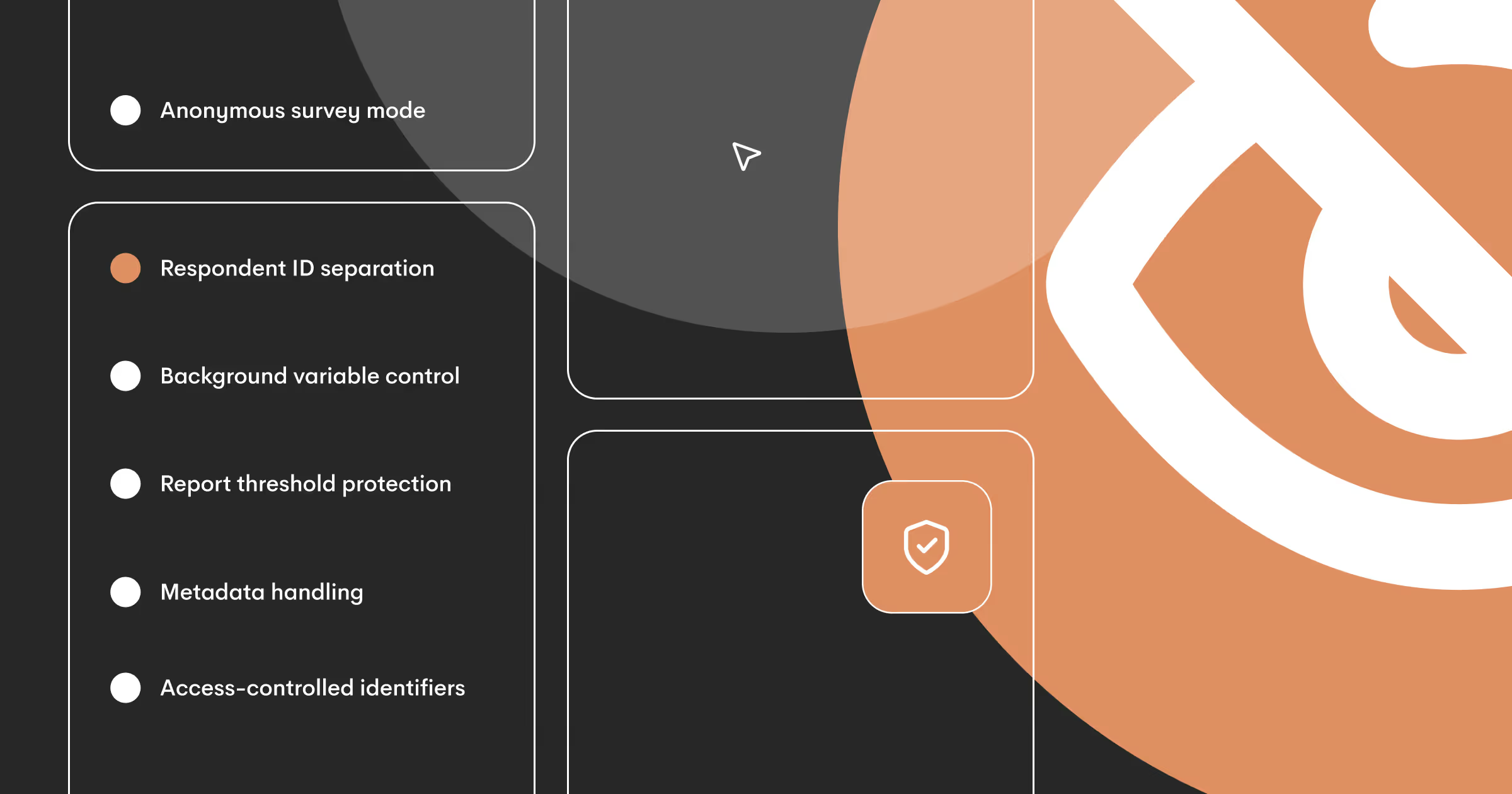
Learn how data lifecycle governance applies to surveytools, from collection and storage to access control, retention, deletion, and integrations, and how organizations can reduce risk while maintaining trust and compliance.



Ensuring responsible data management from collection to deletion
Surveytools are powerful tools for collecting employee feedback, customer insights, research data, and operational information. However, they also process and store personal and potentially sensitive data. Data lifecycle governance ensures that information collected through surveytools is managed responsibly from creation to deletion.
Effective governance within a surveytool requires structured access controls, secure infrastructure, defined retention policies, transparency around subprocessors, and documented audit trails. Organizations must configure and manage their survey environments in alignment with legal requirements, security standards, and internal policies.
This article explores how data lifecycle governance applies specifically to surveytools, outlines the core lifecycle stages, describes best practices for surveytool governance, and provides guidance for organizations seeking to reduce risk while maintaining trust and compliance.
In short, Enalyzer supports data lifecycle governance by combining secure infrastructure, centralized administration, configurable privacy settings, and compliance focused features, helping organizations operationalize governance rather than just define it.
Enalyzer supports data lifecycle governance by combining secure infrastructure, centralized administration, configurable privacy settings, and compliance focused features, helping organizations operationalize governance rather than just define it.
Data lifecycle governance refers to the policies, controls, and processes that manage data throughout its entire lifespan. In the context of a surveytool, this includes:
Governance ensures that survey data is handled lawfully, securely, and transparently.
The lifecycle begins when a survey is created.
Governance considerations at this stage include:
Surveytools should allow administrators to configure privacy settings and guide users toward responsible survey design.
Once responses are submitted, they are stored within the surveytools infrastructure.
Key governance requirements include:
The surveytool must provide clear documentation of its security measures and infrastructure controls.
Controlling who can view and manage survey data is critical.
Effective governance requires:
Without structured access management, survey data can become fragmented and vulnerable.
Surveytools often integrate with business intelligence tools, HR systems, CRM platforms, or analytics software.
Governance controls should include:
Organizations remain responsible for how survey data is shared beyond the surveytool.
Survey data should not be stored indefinitely.
Strong lifecycle governance requires:
Retention rules should align with regulatory requirements and internal policies.
The final lifecycle stage involves secure deletion or anonymization.
Surveytools should provide:
Governance maturity is demonstrated by consistent and verifiable deletion practices.
To support lifecycle governance, a surveytool should offer the following capabilities:
Organization-level administrators must be able to oversee all surveys, manage permissions, and monitor activity.
Surveytools should record actions such as data exports, permission changes, and deletions to support accountability.
Clear documentation of subprocessors and infrastructure providers supports third-party risk management.
The surveytool should enable organizations to respond efficiently to data subject access or deletion requests.
Options for anonymous responses, limited metadata tracking, and secure sharing links strengthen compliance alignment.
Define clear guidelines for who may create surveys, what data may be collected, and how long responses may be retained.
Ensure employees understand privacy obligations and secure survey design principles.
Periodically review user permissions and remove unnecessary access rights.
Configure the surveytool to automatically enforce retention schedules where possible.
Evaluate whether surveytool configuration, security settings, and integrations remain aligned with legal and organizational requirements.
Surveytools often process personal and sometimes sensitive data. Without proper governance, organizations risk data breaches, regulatory penalties, and reputational damage.
Anonymization reduces risk, but governance responsibilities still apply to system security, access control, and retention practices.
Retention periods depend on legal requirements, contractual obligations, and the purpose of data collection. Many organizations define retention policies ranging from one to five years, depending on context.
The organization using the surveytool remains responsible for data governance, even if the surveytool provider manages infrastructure and security.
Common risks include excessive data retention, uncontrolled exports, weak access management, and unmonitored integrations.
Surveytools are valuable for collecting structured feedback and insights, but they also introduce data governance responsibilities. Data lifecycle governance ensures that survey data is collected responsibly, stored securely, accessed appropriately, retained only as long as necessary, and deleted when required.
Organizations must combine a secure surveytool configuration, clear internal policies, access management discipline, and ongoing oversight to maintain compliance and reduce risk. When lifecycle governance is embedded into surveytool usage, organizations strengthen trust, improve accountability, and protect both their stakeholders and their reputation.
Learn how to strengthen governance across your survey data lifecycle →
We'll match you with the right expert.